
Guardrail End Terminals
Home | Guardrails & Road Barrier Products | Roadside Guardrail Systems | Guardrail End Terminals
Providing protection and tensile strength.
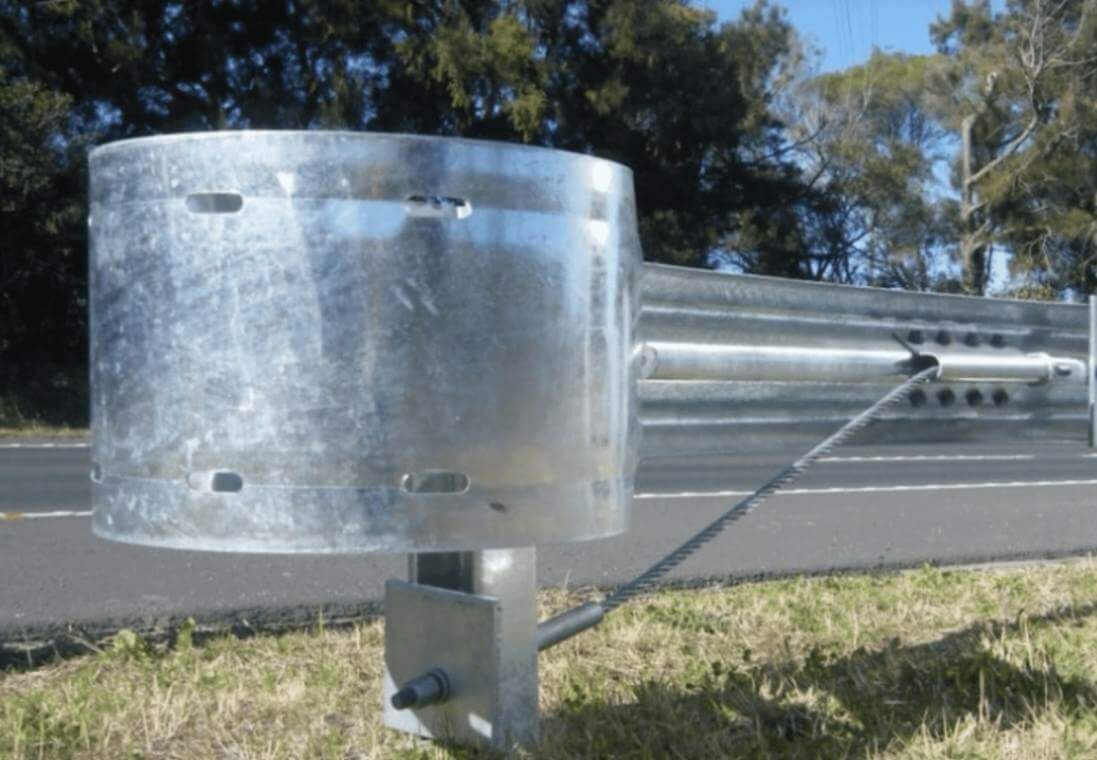
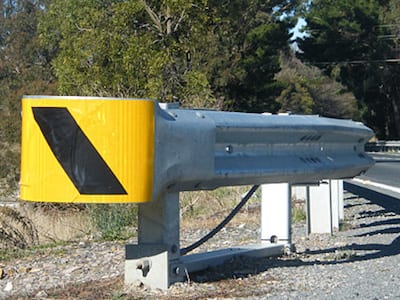
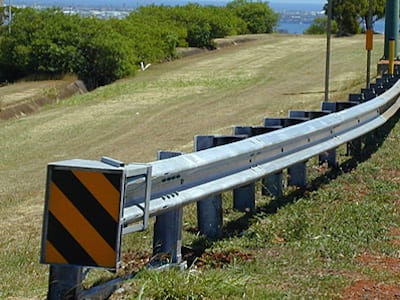
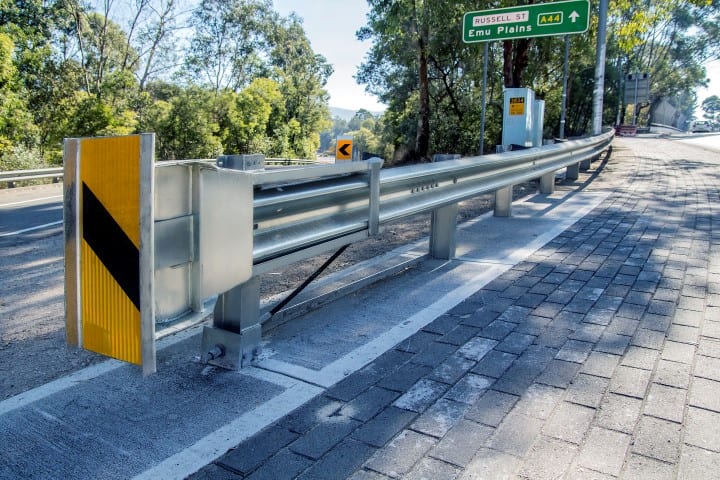
A guardrail end terminal is the crash-tested assembly fitted to the open end of a guardrail barrier, designed to absorb a head-on impact or steer the vehicle away rather than let it strike a blunt rail end. The right terminal type depends on the road’s speed, the available run-out space and the containment level the barrier is rated to.
Metal Fencing Specialists installs guardrail end terminals across Sydney and NSW as part of a full barrier run or as an upgrade to an existing one, set out to the approved design and Transport for NSW requirements.
Guardrail End Terminal Gallery
Even safer vehicle containment.
End terminals are also used to anchor the road safety barrier system and introduce the necessary tensile and flexural strength required for safe vehicle containment and re-direction throughout the length-of-need section.
Guardrail end terminals are an integral part of minimising the damage from erratic vehicles, as the guardrail end terminals anchor the entire system, providing more strength and efficiency when it comes to deflecting impacts and redirecting speeding vehicles.
They are commonly seen on roads and highways, due to their efficiency in reducing vehicle impacts while also providing increased safety to drivers
It is a requirement that all guardrail safety barrier system be adequately anchored at each end with an appropriate end terminal.
For a safer option when it comes to your next project, Metal Fencing Specialists guardrail end terminals are an ideal option for protecting pedestrians, drivers, and occupants. Get in touch with us today at 1300 904 284 for more information on different variants and installations for your project.
Send an enquiry
Please note that we only service the Sydney region and are unable to do residential jobs.
Frequently Asked Questions
End terminals are fitted at the exposed ends of a guardrail run to prevent an errant vehicle from impacting the blunt end of the barrier head-on, which can cause severe injuries. A properly installed terminal either cushions the impact by collapsing in a controlled manner or redirects the vehicle away from the end of the barrier. They are a mandatory component of compliant guardrail installations on Australian roads.
We install a range of end terminals suited to different guardrail systems, speed environments, and site geometries. Options include flared terminals, turned-down ends, and crash-cushion style terminals depending on the approach angle and the required test level. The correct terminal type for your project is chosen based on your project specifications and the requirements of the relevant road authority.
All end terminals installed on public roads in Australia must be crash tested to the standard that matches the speed of that road environment. Using a terminal that hasn’t been tested or doesn’t meet the required standard isn’t permitted on Transport for NSW road networks, and for good reason. Non-compliant or outdated terminals carry serious risks in a crash, including the guardrail spearing through the vehicle or bringing it to a stop so abruptly that injuries become unsurvivable.
Older terminal designs that failed to meet modern crash testing requirements have been discontinued entirely. And if a crash does occur involving a non-compliant terminal on your project, the consequences you or the contractor responsible can be severe, including significant fines and civil liability under NSW work health and safety laws.
End terminals are installed at each exposed end of a guardrail run by our team, following the manufacturer’s installation instructions and the project specifications. The terminal is anchored to the ground and connected to the guardrail in the correct sequence to ensure the energy-absorbing mechanism will function as designed in a crash. Post-installation, we verify alignment and connection points before the barrier is opened to traffic.
Most crash-absorbing terminals are designed for single-use performance and must be replaced after they are struck by a vehicle, as the energy-absorbing components are likely to have deformed. Even if visible damage appears minor, a terminal that has been impacted should be assessed by a qualified installer before it is returned to service.